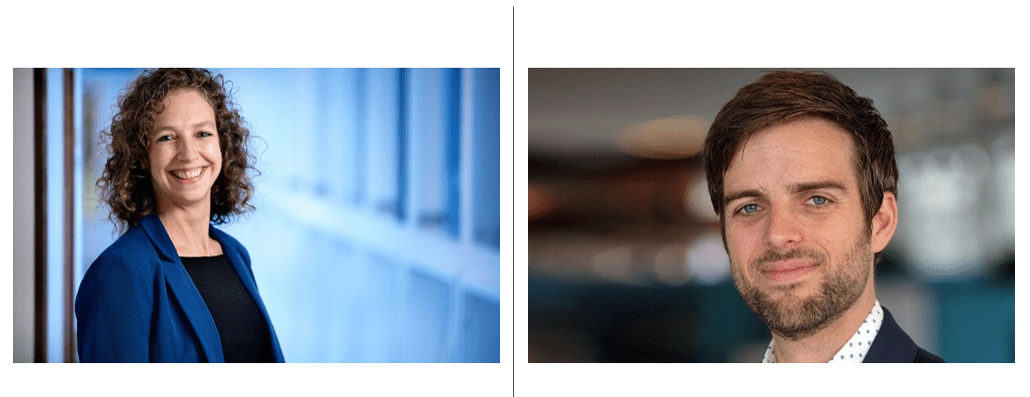


International Cardiovascular Research Partnership Awards for CARIM researchers Miranda Nabben and Matthijs Cluitmans
Two international research teams involving CARIM researchers have received an International Cardiovascular Research Partnership Awards from a collaboration between the Dutch Heart Foundation, the British Heart Foundation (BHF), the Deutsches Zentrum für Herz-Kreislauf-Forschung (DZHK, Germany), and the Lefoulon-Delalande Foundation (LDF, France).
The SHEA-META (Sex-Specific Heart-Adipose Communication Driving Metabolic Dysfunction in Diabetic Cardiomyopathy) consortium, led by Dr Miranda Nabben (Dept of Cardiology), Dr Lisa Heather (University of Oxford) and Dr Annie Turkieh (INSERM, Université de Lille) studies why people with type 2 diabetes develop heart disease differently based on sex, with a focus on why women face a higher risk of heart failure after menopause. Researchers are investigating how diabetes changes heart metabolism, communication between heart cells, and signals released by fat tissue in men and women. Using lab experiments and computer models, the team aims to identify biomarkers that can predict which patients with diabetes are most likely to develop heart disease. These findings could improve diagnosis and treatment for both women and men.
Vamp-MD (Ventricular Arrhythmia Mechanisms & Prediction through Multi‑Domain integration ) aims to improve prediction of life-threatening heart rhythm disorders that can lead to sudden cardiac death. Current methods are often inaccurate, resulting in some patients receiving unnecessary implanted defibrillators while others at high risk remain untreated. The project develops a new ‘electro-structural’ approach that combines analysis of the heart’s electrical activity and physical structure at the same time. Researchers use laboratory studies on donated hearts, advanced imaging in patients, and artificial intelligence to uncover hidden patterns linked to arrhythmia risk. The goal is to create a simple and widely usable test that can better identify which patients truly need preventive treatment, while avoiding unnecessary interventions for low-risk individuals. This could save lives and reduce healthcare costs. The project is led by Dr Matthijs Cluitmans (Dept of Cardiology), Dr Fu Siong Ng (Imperial College London) and Dr Laura Bear (University of Bordeaux).