
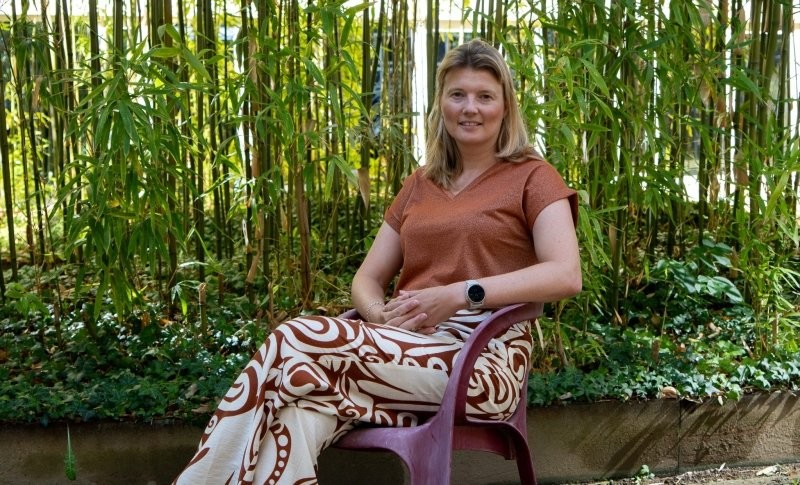
Boy Houben

Associate professor

Alfons (Boy) Houben is Associate Professor at the Department of Internal Medicine of Maastricht UMC+. He graduated in Biology at the University of Nijmegen, and received his PhD, in Maastricht in 1993, on early microcirculatory changes in patients with type 1 diabetes. He has longstanding expertise in human (non-invasive) micro- and macrovascular function tests in combination with (pharmacological) interventions, and in the epidemiological setting (The Maastricht Study). Using this unique approach, his main research interest is on the role of microvascular dysfunction in cardiometabolic diseases. An additional focus in his present research is the effects of lifestyle modifications in order to improve microvascular function. He is Past-President of the European Society for Microcirculation, chair of the Dutch Society for Microcirculation and Vascular Biology, and member of several other international scientific societies.

The focus of my research for many years has been microvascular dysfunction (MVD) as both a cause and a consequence of (cardio)metabolic diseases. One important function of the microcirculation is to deliver oxygen/nutrients to all tissues and to remove waste products. In normal metabolism this includes the delivery of glucose, which taken up by the gut following a meal, to skeletal muscle in order to be stored as glycogen. For that, insulin plays an important role by stimulating the endothelium to produce nitric oxide (NO), which leads to recruitment of capillaries in skeletal muscle and thus an increase in exchange surface. As a result, both glucose and insulin can reach skeletal muscle cells quickly and easily in order to store glucose in the cells. In our working hypothesis, we state that MVD may disturb this insulin-mediated glucose delivery/uptake, leading to metabolic insulin resistance and contributing to the development of type 2 diabetes. Within the framework of The Maastricht Study (a population-based cohort study), we perform deep phenotyping of the microcirculation. By using this approach, we are looking for (early) determinants of MVD, and study the role of MVD in the development and progression of various diseases (e.g. (pre)diabetes, heart failure, and depression).

Department of Internal Medicine
P. Debyelaan 25, 6229 HX Maastricht 
PO Box 5800, 6202 AZ Maastricht

  • 2011
    • Jonk, A. M., Houben, A. J., Schaper, N. C., de Leeuw, P., Serne, E. H., Smulders, Y. M., & Stehouwer, C. D. A. (2011). Meal-related increases in microvascular vasomotion are impaired in obese individuals: a potential mechanism in the pathogenesis of obesity-related insulin resistance. Diabetes Care, 34 Suppl 2(SUPPL. 2), S342-S348. https://doi.org/10.2337/dc11-s240
    • Jonk, A. M., Houben, A. J., Schaper, N. C., de Leeuw, P. W., Serne, E. H., Smulders, Y. M., & Stehouwer, C. D. A. (2011). Acute angiotensin II receptor blockade improves insulin-induced microvascular function in hypertensive individuals. Microvascular Research, 82(1), 77-83. https://doi.org/10.1016/j.mvr.2011.04.002
  • 2010
    • Jonk, A. M., Houben, A. J., Schaper, N. C., de Leeuw, P., Serne, E. H., Smulders, Y. M., & Stehouwer, C. D. (2010). Angiotensin II Enhances Insulin-Stimulated Whole-Body Glucose Disposal but Impairs Insulin-Induced Capillary Recruitment in Healthy Volunteers. Journal of Clinical Endocrinology & Metabolism, 95(8), 3901-3908. https://doi.org/10.1210/jc.2009-2587
    • Ronden, R. A., Houben, A. J. H. M., Kessels, A. G. H., Stehouwer, C. D. A., de Leeuw, P. W., & Kroon, A. A. (2010). Predictors of clinical outcome after stent placement in atherosclerotic renal artery stenosis: a systematic review and meta-analysis of prospective studies.Journal of Hypertension, 28(12), 2370-2377. https://doi.org/10.1097/HJH.0b013e32833ec392
  • 2007
    • Dielis, A. W. J. H., Smid, M., Spronk, H. M. H., Houben, A. J. H. M., Hamulyák, K., Kroon, A. A., Ten Cate, H., & de Leeuw, P. W. (2007). Changes in fibrinolytic activity after angiotensin II receptor blockade in therapy-resistant hypertensive patients. Journal of Thrombosis and Haemostasis, 5(7), 1509-15. https://doi.org/10.1111/j.1538-7836.2007.02577.x
  • 2004
    • van Onna, M. J. H., Kroon, A. A., Houben, A. J. H. M., Koster, D., Zeegers, M. P. A., Henskens, L. H. G., Plat, A. W., Stoffers, H. E. J. H., & de Leeuw, P. W. (2004). Genetic risk of atherosclerotic renal artery disease: the candidate gene approach in a renal angiography cohort. Hypertension, 44(4), 448-453. https://doi.org/10.1161/01.HYP.0000141440.02210.da
  • 2002
    • Keulen, E. T. P., Wyse, D. G., Houben, A. J. H. M., van Lin, J. M., Lutgens, L. C. H. W., Rijkers, K., Dallinga-Thie, G. M., & de Bruin, T. W. A. (2002). Reduced structural and functional skin capillaries in familial combined hyperlipidemia affected men, associated with increased remnant-like lipoprotein cholesterol levels. Atherosclerosis, 163(2), 355-362. https://doi.org/10.1016/S0021-9150(02)00021-7
  • 1999
    • Huvers, F. C., de Leeuw, P. W., Houben, A. J. H. M., de Haan, C. H. A., Hamulyak, K., Schouten, H. J. A., Wolffenbuttel, B. H. R., Wyse, D. G., & Schaper , NC. (1999). Endothelium-dependent vasodilatation, plasma markers of endothelial function, and adrenergic vasoconstrictor responses in type 1 diabetes under near-normoglycemic conditions.Diabetes, 48(6), 1300-1307. https://doi.org/10.2337/diabetes.48.6.1300